admin
admin
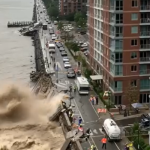
Catastrophic flooding sent shockwaves through communities as swollen rivers overwhelmed their banks, causing structures along the shore to collapse and placing lives at serious risk. Torrential rains pushed water levels beyond warning lines, washing away protective embankments and undermining foundations once thought stable. Homes, retaining walls, and utility poles surrendered to the surging currents, cascading into rivers with the roar of destruction.
Residents watched in horror as properties vanished downstream, forced to flee at a moment’s notice. Emergency teams scrambled to evacuate families, erect temporary barriers, and assess which structures might fail next. The danger was not isolated — entire neighborhoods perched on weakened ground were deemed too perilous to stay in.
In the aftermath, authorities declared disaster zones and mobilized resources. Engineers warned that aftershocks and further rains could trigger additional collapses. For now, the fragile remains of riverbank properties stand as grim reminders of how quickly nature can overturn human constructs — and how critical early warning, proactive planning, and swift evacuation can be in preserving life.